Lunch for under 200 calories

It’s always tough to find low calorie breakfasts and lunches when you’re dieting… Actually, scratch that. It’s tough to find low calorie breakfasts and lunches that will keep you full when you’re dieting. But, if you focus on protein (which has been proven in study after study to keep you feeling full for longer than carbs), you’re onto a good start to constructing a great, filling meal. Yogurt is a great start for breakfasts, and eggs are a great start for lunches.

I have to admit, I was a little snobby about separating out egg whites and discarding yolks. First of all, it feels like a waste, and secondly, the white not only has no taste, but it actually seems to smell more ‘eggy’ than the yolks! But, I had a go on Jillian’s quick fix diet from Making the Cut, which involves eating six egg whites with spinach every morning (seriously, blegh), which inspired this lunch. Basically, it’s a simple omelette made with one whole egg and one egg white, filled with low calorie, tasty veggies. It’s simple to make, it comes out at under 200 calories, it’s good for you, and it’s filling. That’s a lot of win… Untitled

INGREDIENTS

  • 1 tsp olive oil
  • 100g mushrooms
  • 2 tomatoes
  • 50g frozen spinach
  • 1 whole egg
  • 1 egg white

METHOD

  • Chop the mushrooms and tomatoes.
  • Heat half the oil in the pan, then fry the mushrooms. Halfway through the cooking, add the tomatoes.
  • Meanwhile, defrost the spinach in the microwave.
  • Add the spinach to the pan, and heat through together. Turn the mix onto your plate.
  • Rinse the spinach bowl and whisk the eggs together.
  • Rinse the pan and heat the rest of the oil.
  • Add the eggs, allow to set at the base, then push the edges to the middle, sliding the eggs back to the edge, as you make a normal omelette.
  • When you’re done, add the filling, then turn out onto a plate.

CALORIES: 183 per omelette

Sweet potato and black bean empanadas

Being from the UK, I haven’t had many opportunities to eat empanadas – they’re not exactly common here, which is strange, because they were originally introduced to Mexico by Cornish miners. That’s right, empanadas are actually Cornish pasties in disguise! Once you realise this, you can totally see the link, as they’re pretty much the same thing: a tasty filling, wrapped around pastry, in a half moon shape!

I recently decided to try a black bean recipe for the first time in my life (black beans are also not a staple in English cookery!), as I’d been tempted so many times by a black bean chilli recipe in Jillian Michaels’ recipe book for Master Your Metabolism. As I had to buy a bag of these beans, and I had a sweet potato knocking around in the fridge from my organic veg box, I decided to give making sweet potato and black bean empanadas a go – and I’m really glad I did! I found them on Cooking Light’s website (I love that magazine, but you can’t get it here) under a section about great freeze ahead recipes. I’ve tested them out in the freezer, and they’re perfect to reheat later. Brilliant!

I’ve decided they make a great lunch, with a feta cheese, tomato, cucumber and rocket salad.

Here’s the recipe, translated into ‘English’, but you can also get the US recipe, and view the original, by clicking here. I kept in the cup measurements, because honestly, they’re much easier!

INGREDIENTS

  • 9 oz plain flour
  • 3/4 tsp salt
  • 1/3 cup rapeseed oil
  • 1/4 cup cold water
  •  1 tbsp cider vinegar
  • 1 large egg, lightly beaten
  • 1 dried chipotle chilli (you can buy these in Tesco)
  • 1 tbsp cumin seeds
  • 1 cup cooked sweet potato (about 1 large)
  • 1 cup cooked black beans
  • 1 bunch spring onions, finely chopped
  • 2 tbsp chopped coriander
  • 1 tsp chilli powder, or smoked paprika
  • 1 egg white, beaten

METHOD

  • Combine flour and salt in a bowl, and mix.
  • Combine rapeseed oil, cold water, vinegar and egg in another bowl, and then add slowly into the dry mix until just moist. Knead lightly in the bowl, then cover and allow to chill for one hour.
  • Rehydrate the chipotle chilli with boiling water and stand for 15 minutes. Then, chop finely.
  • Toast and grind the cumin seeds.
  • Combine the chilli and cumin with the potato, black beans, spring onions, coriander, chilli, and some salt. I processed mine to make it very smooth. Taste it carefully, and season to taste, because this mixture won’t really change much in the oven – it just gets warmer, rather than being cooked.
  • Divide the dough into 10 pieces, and keep the dough covered while you work.
  • Take one piece of dough and shape into a ball. It’s best not to do this with flour, as the shape forms easier without. But, you will need flour on the surface when you roll it out. Roll into a circle.
  • Fill the centre with 3 level tablespoons of the mix, then paint the edges with egg white, and seal.
  • Continue for all of your dough and mix.
  • Cut three vents on your empanadas, then bake in a preheated oven at 200c, on a baking tray coated with oil spray. Bake for 16 minutes, or until lightly browned.

CALORIES: 209 per empanada

When I froze these, I baked them for slightly less time. Then, just sealed them in a bag and placed them on a sheet in the freezer. When it’s time to cook, I defrost them and then heat them back up in the oven for about ten minutes.

Really, these are so tasty with a salad for lunch! I combine them with 35g of low-fat feta cheese, 1 tsp olive oil and a dash of balsamic vinegar, cucumber, lettuce and tomato, and it’s all under 350 calories. Quite high for me as a general rule of thumb, but I’m experimenting with eating more for meals and less for snacks! (Unhealthy snacks are now banned during Lent!)

Omurice

I’m one of those weird people who gets all funny about ketchup. I like it, don’t get me wrong, but I have certain rules about it – which I’ve never really examined in too much depth, to be honest. For example, it is never to be squirted onto food – makes it soggy. Better to go on the side, by itself, so it can be dipped into. Also, it is never to be mixed in with things to create some hideous Frankenfood of soggy ketchup and ‘other stuff’. That’s just wrong.

So, with that in mind, it’s very strange that one of my most favourite and comforting foods should be omurice: the dish that breaks my cardinal food rules and somehow manages to rise above its offence:

Omurice bento

Omurice is basically rice and veggies cooked with some ketchup, then coated in an omelette and served with another drizzle of ketchup on top. It’s comfort food for children, which makes it all the more weird how strangely nostaglic the dish is for me, a 28-year-old woman who has never lived in Japan… But nevertheless, there’s something very universal about its combination of starchy carbs, eggy protein, and lashings of tomato sauce.

This recipe makes four portions:

INGREDIENTS

  • Butter
  • 2 chicken thighs, boned
  • 1 onion
  • 50g carrot
  • 1 green pepper
  • 2 shiitake mushrooms
  • 1 tbsp parsley
  • 4 cups cooked Japanese rice
  • 3 tbsp ketchup
  • 1 tsp sake
  • Dash Worcestershire sauce
  • 8 eggs
  • Ketchup to serve

METHOD

  • Finely chop the onion, carrot, mushroom and parsley.
  • Debone the chicken and remove the skin. Cut the thigh into small pieces, around 1cm in size, then season with salt and pepper.
  • Heat 1 tbsp butter in a frying pan and sauté the onion until slightly softened. Add the chicken and fry until the outside has gone white. Add the carrot, pepper and mushrooms and cook until soft. This could take as long as ten minutes. You need to ensure the carrot is tender, as it will not be cooked again. Add the parsley and remove from the heat, reserving the mixture and wiping out the frying pan.
  • Melt 1 tbsp of butter in a frying pan and add the hot rice, stirring well. Add the fried mix along with the ketchup, sake and Worcestershire sauce. Season if needed, and keep warm. Do not over cook as this will dry out the rice.
  • In another, shallow frying pan, heat 1 tsp butter. Beat two of the eggs, season with salt, then pour into the frying pan, spreading to cover the base. Put a quarter of the rice in the middle of the pan while the egg is still slightly raw. This helps to stick the rice mixture to the omelette.
  • When the eggs are slightly set, wrap the edges over the top of the rice and turn out onto a warm plate. Don’t worry if you pierce the egg as you do so, as the edges are tucked under. Using a paper towel, shape it as in our photo, then squirt tomato sauce on the top. Continue with the rest of the eggs and mixture until you’ve made four omelettes.

You can also keep this for the following day, and serve it in a bento ala the picture!

Lemon Posset

Week Six : Lemons
Weird story – up until I tried this recipe, I didn’t like lemon in sweet things. Hated it. Thought it was weird. Maybe it was thanks to the dodgy lemon meringues that were knocking around when I was a kid, but I just couldn’t understand why people liked lemon in sweet things. Now I’ve been converted by lemon posset, I realise that it’s just that I don’t get on with the supersweet, barely tart kind of lemon puddings. I like my lemon desserts sharp and creamy! I’m not saying this isn’t sweet – it is – but it’s balanced by the sharpness of the lemons perfectly. I can say all this because it wasn’t me who invented it!

The recipe is supposedly based on a medieval dish of milk curdled with wine or beer, with spices added to it. The alcohol would curdle the milk, which was supposed to be a great cure for things like the cold. Even today, we drink hot milk to get to sleep, so I guess it’s evolved since then! It’s also mentioned in Macbeth, when the evil Lady Macbeth uses possets to knock out Duncan’s guards.

This recipe works on a similar principle – but instead of curdling the cream, the lemon acts to set it, creating a dense, smooth and creamy taste. You can add grated lemon zest to this, but I prefer to keep the smoothness of the cream totally uninterrupted by the nuggets of peel.

Lemon Posset

INGREDIENTS

  • 600ml double cream
  • 140g caster sugar
  • Juice of 2 lemons (at least 75ml)

METHOD

  • Combine the cream and sugar in a pan, and heat until scalding – but do not boil.
  • Whilst on the heat, add the lemon juice and allow to boil for 30 seconds, whisking to prevent the cream from burning.
  • Allow to cool before pouring into bowls and placing in the fridge until set.

Some people like to serve this with shortbread or other crisp biscuits, but I really don’t think it needs any additions!

Make your own almond milk

Making Fresh Almond Milk

Image by QuintanaRoo via Flickr

I’m no health nut, and I’m definitely not a vegan, but I love soya, almond, coconut and rice milk. I recently bought Jillian Michaels’ excellent Master Your Metabolism Cookbook, and she asks you to replace your diary with other products – specifically not soy, for various reasons. So, I purchased a litre of coconut milk and one of almond milk (and then had to carry them home four miles from the shop, but that’s a whole other story!) and discovered how delicious almond milk was in porridge and banana smoothies. I’d never had it before, and realised precisely why this was when I got to the health food shop – firstly, it’s quite hard to find (only in health food shops and Waitrose, it seems!) and secondly, it’s a whopping £3.00 a litre… Now, I don’t know about you, but that’s quite a lot for me, so I was pretty pleased to discover that it’s really easy to make your own almond milk at home! I’m not saying it tastes better than shop bought – I think the shop bought stuff is sweeter, but at home it gets a bit worrying to continually add honey to your mix, so I stopped after three teaspoons! However, it’s definitely cheaper, as once you’ve bought yourself a nut milk bag, you end up paying about £1.60 or so for every litre – basically, the cost of your almonds.

So, the recipe!

EQUIPMENT

  • Blender
  • Nut milk bag (buy these on eBay if you find them hard to track down)
  • Bowl
  • Jug

INGREDIENTS

  • 220g almonds
  • Water, to cover
  • 1 litre water, to make milk (4 cups)
  • Vanilla extract, optional
  • Honey or other natural sweetner, optional

METHOD

  • Cover your almonds with water (I like to rinse mine first as well) and leave to stand overnight, for at least 8 hours, and up to 12.
  • Drain away the soaking water (I rinse here again) and add the nuts to a blender.
  • Pour in your four cups / 1 litre water, then blend well. Add in the vanilla extract and sweetner to taste, if using.
  • Pour the mixture into a nut bag over a bowl or wide jug, and strain. You’ll have to help the process along by squeezing the bag to get the excess moisture out.
  • Your nut milk is ready! Keep in the fridge, covered, for up to four days.

The leftover almond meal is great for adding fibre to porridge, cereal, etc!

Fishy snack or sweet treat? Make your own taiyaki!

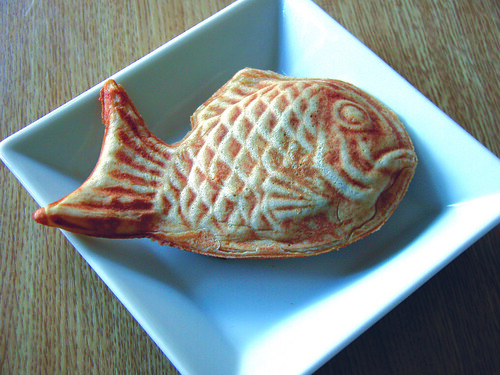
Quick, look at this and tell me what you think of:

Taiyaki on a plate

I expect you didn’t think ‘ah, it’s a delicious, sweet Japanese street food’, did you? If you did, congratulations! Read on for a recipe to make your very own at home! If you didn’t, then let me educate you – read on for a recipe to make your very own at home! (See what I did there?)

The best way to describe taiyaki is as waffle-type confections which are usually filled with a Japanese sweet called ‘anko’. Anko, or an, is made from aduki beans, which you can purchase in most major supermarkets, as they’re actually a health food. Not when you cook them Japanese style, of course, which basically means stewing them with plenty of sugar.

DSC_0268

In Japan, these are cooked in dedicated stalls, and although an is the most common filling, you can even get savoury versions with things like cheese inside. At home, in a western kitchen, your biggest hurdle to making these yourself will be buying a proper taiyaki press.

Taiyaki step 1

I got mine from J-List, and if you look on the left hand side of this site and scroll down, you can find my affiliate link to J-List which means you can support Distracted Gourmet at the same time as making yummy treats. You might also be able to find these in Oriental or Japanese supermarkets.

Taiyaki ingredients

Apart from the an, the ingredients for taiyaki are very easy to find, and you probably have most of them already.You simply mix your batter together (recipe below), and then grease up your taiyaki press. Then, ladle in your batter, and spoon in some an, and place on your hob.

Taiyaki step 2

Then, you cover the an with a bit more batter, so that you create a nice, sealed pocket for your filling.

Taiyaki step 3

Once you’ve done that, you close the press and turn it over the heat, keeping it firmly closed, until the batter is cooked and your fish takes on a lovely golden colour.

Then, you simply have to trim the excess batter from your fish, and serve it piping hot!

Taiyaki step 4

Try your own taiyaki today!

INGREDIENTS

  • 125g plain flour
  • ½ tbsp baking powder
  • ½ tbsp caster sugar
  • ½ tsp salt
  • 225ml milk
  • 1 egg
  • 1 tbsp vegetable oil
  • 6 tbsp anko paste

METHOD

  • Begin by oiling your taiyaki press thoroughly – you don’t want anything to stick.
  • Sift the flour, salt and baking powder together in a bowl. Add the sugar and mix.
  • Beat the egg in a jug, and then add in the milk and oil.
  • Add the liquid ingredients into the bowl with the dry ingredients, and mix until combined.
  • Put the taiyaki pan over the heat and allow to get as hot as possible for a couple of minutes. Once the pan is hot, recheck that it’s well oiled, and then spoon in some of the batter. Allow to set for a few seconds, and then add a small spoonful of the anko paste (or other filling) in the main body section of the fish. Pour on a little more batter over the top of the anko paste to cover, and close down the press immediately and allow to cook. Turn over the heat and cook until the taiyaki is golden brown on both sides. You may need to hold the handles together to ensure the taiyaki pan doesn’t open, as the batter will expand as it cooks.
  • Once it’s cooked, eat it hot!

Also, try other fillings – sweet cream, Nutella, Smudge, peanut butter, cheese or even stir-fried vegetables!

If you want to try before you purchase pricey specialist equipment, I’ve seen these on sale in The Japan Centre in London – their supermarket is well worth a visit, whether you’re there to nosh taiyaki or not!
Taiyaki

Sweet vanilla cream and dulce de leche butterfly cakes

Yesterday, I dangled the promise of a delicious recipe in front of you, and I’m not about to go back on my word! Whilst I’m not claiming that my idea to swap buttercream with real cream on a butterfly cake is really revolutionary, I have to say it makes a huge difference to these cakes. Okay, they won’t keep as long and they’re not as immune to standing around for hours (days?) not being eaten, as with traditional butterfly cakes (like the one below), but to me, they are a million times nicer, and a special treat of epic proportions. Just right, in other words, for serving at your royal wedding watching party!

Old fashioned butterfly cake

This is hardly a ground breaking recipe, but I personally had a hard time trying to sort through the many recipes for butterfly cakes I found online for a good one. There were some interesting variations but not a lot of simple, good old fashioned recipes. So, rest assured that if you want to make plain, no-nonsense butterfly cakes, the sponge recipe below, from Nigella’s How to be a Domestic Goddess, will do you right. Then, you only have to follow the directions for the dulce de leche buttercream and omit the dulce de leche, and you’ll have butterfly cakes the old fashioned way in no time.

But life is short, why not try yours with sweet vanilla cream?!

Butterfly cake

INGREDIENTS

For plain sponge cakes:

  • 125g softened butter
  • 125g caster sugar
  • 1/2 tsp vanilla extract
  • 2 eggs
  • 125g self-raising flour
  • 2-3 tbsp milk
  • Icing sugar, for dusting

For the sweet cream and dulce de leche topping:

  • Small tub of double cream
  • 1 tbsp (or to taste) vanilla caster sugar
  • Tin of Nestle Carnation dulce de leche

For alternative dulce de leche buttercream

  • 125g butter
  • 125g icing sugar
  • 2 tbsp dulce de leche

METHOD

  • Preheat oven to 200c or gas mark 6.
  • Cream together the butter and the sugar until light and fluffy.
  • Add the vanilla extract and mix until combined.
  • Mix the eggs in one by one, adding a large spoonful of flour in between each addition.
  • When mixed, add the rest of the flour, then mix to a smooth dropping consistency using the milk.
  • (Alternatively, if you’re one of these super duper posh types what has a fangled machine, simply add all the ingredients except the milk to a processor or food mixer until blended, then add the milk until it reaches the correct consistency. I’m not bitter or jealous at all, honest.)
  • Line a 12-bun cake tin with cake cases, and pour in the mixture. Bake for 15-20 minutes until golden on top.
  • Remove from the oven and leave to cool.
  • While the cakes are cooling, you can make your sweet vanilla cream! Simply add vanilla sugar (or sugar and a hint of vanilla extract) to your double cream, and whisk until it forms soft peaks. You need it to hold its shape when you spoon it onto your cakes, but be careful you don’t overwhisk – I am the worst at over-enthusiastically churning my cream into a grainy mess, so I can talk…
  • Once you’ve created your sweet cream, you only have to wait for the cakes to cool before assembling.
  • To make a butterfly cake, simply cut a round circle in your cake, tipping the knife inwards so you form a circular well inside as you do so. Fill to the top with your dulce de leche. Then, finish with a swirl of sweet cream – you can make a jaunty tip simply by using the end of your spoon and lifting off in the middle. Then, cut the piece of cake you excised in half and turn those pieces into the wings of a butterfly, and finish with a dusting of icing sugar.

Here’s what those beauties will look like inside:

Inside butterfly cake

An additional thought – if you reckon dulce de leche is too forrun for a patriotic national celebration such as the wedding of Kate and William, why not turn it into a tribute to a classic Victoria sponge by adding a spoonful of jam to the middle instead of caramel?

My tip for these is that the cream should be still chilled when the guests eat (why? Because it’s DELICIOUS that way, try it!), and that they really should be assembled last minute, just because the cream will wilt and spoil if you leave them sitting around for too long.

But, if you want to make your classic butterfly cakes with buttercream, simply cream your sieved icing sugar and very soft butter together until the mix is creamy and white, then add in dulce de leche until you have a still-stiff yet caramelly topping. Finish as above to make your butterfly wings.

Just one thing though…

Old fashioned butterfly cake

Don’t forget your icing sugar!

Old fashioned butterfly cake top

It is absolutely vital for optimum uh, prettiness…

Also, patriotic napkins are optional. (I got mine from Tesco’s.)

Butterfly cake on Union Jack napkin

End of summer: Crispy Panzanella

Grape tomatoes.

Image via Wikipedia

Well, it’s officially nearing the end of the summer, and that means that it’s our last chance to make use of some seasonal produce before… well, let’s not kid ourselves – pretty much everything from the summer is still available all winter round, albeit at a price. But my late summer favourites are strawberries, tomatoes and corn on the cob, and it’s now that these babies come into their own. All of these are on sale at supermarkets, but if you get yourself to a farmers’ market, you can get them even cheaper. Punnets of strawberries for a couple of quid, tubs of cherry tomatoes for 70p, I even bought five ears of corn for a pound a couple of weeks ago.

Here’s a great recipe I found in a foodie magazine ages back, for a crispy crouton and spicy tomato salad. Although it’s called Panzanella in my recipe folder, panzanella is usually made with bread that’s a bit soggier than the stuff you’ll find here. This recipe gives you fresh tomatoes, peppers and cucumbers, drizzled with a spicy, garlicy dressing, and pepped up with crunchy, crispy croutons. It’s one of my favourites, and you can make it all year round thanks to the supermarkets. But why not make it now, when everything’s at its cheapest and best?

Recipe for Crispy Panzanella

INGREDIENTS

  • 2 large garlic cloves
  • One red chilli
  • Sea salt
  • 3 tbsp red wine vinegar
  • Pinch of sugar
  • 200ml olive oil
  • Small red onion
  • 450g tomatoes
  • Black olives
  • Half a cucumber
  • 1 tablespoon capers
  • 1 red pepper
  • 1 very small loaf, torn into small chunks
  • Handful of basil leaves

METHOD

  • Turn the oven onto medium heat and drizzle some of the olive oil over your bread chunks. Sprinkle with a little sea salt and bake in the oven until crunchy and golden brown.
  • Cut your salad ingredients (pepper, cucumber, tomato, onion).
  • Crush the garlic and chilli together in a pestle and mortar with some sea salt until you get a pungent paste.
  • Mix the vinegar, sugar and olive oil together, and whisk in your chili, garlic and sea salt.
  • Mix together the dressing with the vegetables, and allow them to sit for around an hour.
  • Wait until just before serving to pour the veggies and sauce over your croutons, to keep them crispy and fresh. Tear over the basil leaves and serve.

Bukkake udon

If you’re sniggering right now – shame on you! ‘Bukkake’ means splash in Japanese, and this is a chilled noodle dish that you ‘splash’ cold stock over to flavour it. The first time I made this I got the recipe from oyamake.com, but the site is down now. I didn’t have the right toppings so I improvised! It was delicious, and that’s coming from someone who doesn’t usually like udon noodles…

This is a really great summer dish for when it’s incredibly hot and steamy… It actually cools you down and refreshes you! Hopefully, we’ll have plenty of reason to make this dish this year…

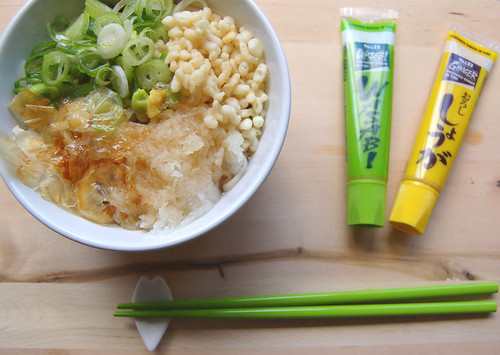
Bukkake udon toppings

Recipe for Bukakke Udon

INGREDIENTS

  • Around 100g dry udon noodles per person
  • 1/3 cup mirin
  • 1/3 cup soy sauce
  • Instant dashi powder
  • Your choice of topping (see below)

RECIPE

  • Mix 1 cup water, 1/3 cup mirin and 1/3 cup soy sauce in a pan, heat and add some dashi stock sprinkles. Remove from heat and sit until cold. You won’t need all of this but it’ll keep for another day if you put it in the fridge in a sealed container.
  • Cook the udon noodles according to the recipe on the packet, remove from heat, strain and wash until cold.
  • Place the noodles in a bowl and add your toppings – mine are spring onions (scallions), toasted teriyaki nori sheets and some bonito flakes. You can also add boiled egg (according to about.com), grated daikon radish or tenkasu (dry tempura drippings). If you want some, add a smear of wasabi paste on top.
  • Splash your sauce over the top, but be careful not to drown the noodles as the sauce is very strong!

Second attempt at bukkake udon - the finale

This is the kind of thing you can knock up from storecupboard ingredients if you’re a Japanese food fanatic like I am – so I consider it to be quite a cheap dish, although if you had to buy everything in especially it’d probably cost a fair bit.

Christmas bento

Although there aren’t many recipes for holiday bento treats from Japan (unless you count fried chicken and cake!), you can adapt western style ideas to Japanese cooking methods, like with these festive gyozas. They’re filled with caramelised onion, turkey and sage and onion stuffing, and are just right for getting in the festive spirit.

Christmas bento and furoshki

To make this bento, you’ll also need to make star shaped onigiri, topped with star shaped ham and cheese, pigs in blankets (chipolata sausages wrapped in streaky bacon and baked in the oven) and stuffing balls, and get rocket leaves (erm… to look like holly…) tomatoes, and cranberry sauce for a dip. A dipping container and food picks (penguin and star shapes were used here for the Christmas bento theme) are useful too. You can also fill a foil-lined side dish container, as here, with glazed biscuits, minced pies, and your favourite fruit and nut mix.

Recipe for festive gyozas

INGREDIENTS

  • Small box sage and onion stuffing
  • 2 medium onions
  • 40g butter
  • 1 tsp sugar
  • Pinch salt
  • Olive oil
  • 150g raw turkey breast
  • 1/2 tsp salt
  • 1 tsp soy sauce
  • 26 gyoza skins
  • Oil

METHOD

  • Mix up your sage and onion stuffing – you need to keep 70g of it for the gyozas and the rest can be made into stuffing balls.
  • Finely chop your onions, then cook on a very low heat with the butter and sugar until they go a golden brown. This could take an hour or more, but you don’t have to stand over it and stir it the whole time, thankfully!
  • Shred the turkey breast with a knife so you end up with meat that’s finely cut but has a bit more texture than mince (and is leaner).
  • Once you’ve done that, mix the caramelised onion, the raw turkey breast, 70g of stuffing and the salt and soy sauce together.
  • Fill your gyozas by placing a small amount in the middle of a dumpling skin, wetting the edges and folding it in half, pleating the edges. It’s easier to do this with a gyoza press.
  • Once you’ve done that, heat some oil in a pan and add six gyozas. Pour water into the pan until it reaches a third of the way up the sides of the gyozas, then cover and cook until the water has evaporated. Once that’s done, remove the lid and fry until the bases are crispy.

Note

You can freeze these gyozas and cook them from raw.

Christmas bento

This recipe originally appeared in 501 Bento Box Lunches, published by Graffito Books.