Carrot and onion rice

This recipe is a pretty good ‘un, in my opinion (I know, I know, who asked me?). Not only does it taste good, but it’s got veggies in it and it’s a way of naturally colouring your food without using chemicals. Now, there’s no way anyone could suggest I’m not up for dying food whenever I get the opportunity, but somehow it seems wrong to dye savoury food. Don’t know why! When you introduce sugar, all the bets are off…

Also, once you’ve softened your veggies, you bung the whole lot into rice cooker and let it cook. Easy! Obviously, you don’t have to eat this in a bento – it makes a great addition to a hot meal, too.

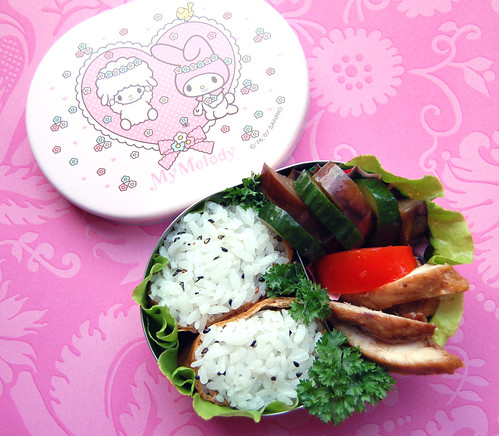
I really like this bento box – I have a thing for single tiered boxes. I also love Animal Crossing. I don’t know if the box is still available, but I bought it from J-List. (If you click that link, you’ll be taken to the J-List site, so if you buy anything, it earns me pennies to buy new bento stuff! Thank you!)

Teriyaki burger and carrot and onion rice

Recipe for carrot and onion rice

INGREDIENTS

  • 2 cups raw rice
  • 1 carrot
  • ½ onion
  • Butter
  • Splash soy sauce
  • Seasoning

METHOD

  • Process the onion and carrot until they are finely chopped, then sauté in butter until softened – but not browned. This will take around five minutes. Season and add the soy sauce.
  • Add to a rice cooker with washed rice and an equal amount of water, and cook as normal.

Scattered summer sushi

Late to the party again… here I am with scattered summer sushi in October. To be fair, I did come up with this recipe in May, but also, you can eat this any time of year, whether the weather’s sunny, or not. It’s the kind of dish that works better when it’s hot, but it’s still pretty nice around here even in autumn…

And yes, I did get carried away with decorating this, but it was worth it. So pretty! And not too much hassle to prepare, in the grand scheme of things.

Scattered summer sushi

INGREDIENTS

  • 2 cups Japanese rice (around 430g)
  • 6 tbsp sushi rice vinegar (or check label)
  • 1 tbsp sake (optional)
  • 1 piece dried konbu (optional)
  • 2 eggs
  • 1 egg yolk
  • 2 tsp cornflour
  • Large pinch salt
  • Pinch sugar
  • Vegetable oil
  • 1 Cucumber
  • 1 Carrot
  • Handful mange tout (cooked)
  • 4 tofu pouches (optional)
  • 16 large prawns (shrimp)
  • 1/2 cup edamame beans (cooked)

METHOD

  • Make your sushi rice – I recommend you buy a rice cooker, as it takes all of the guesswork and stress out of cooking rice. Mine cost me about £10 three years ago and is still working fine. Firstly, wash the rice thoroughly and leave it to soak for half an hour. Then, drain and add your sushi rice to the same quantity of water in your rice cooker. Add the sake and konbu if using, then switch on and leave to cook. Once it has finished, leave it to rest for 15 minutes.
  • Turn the rice out into a damp, flat container (like a Pyrex oven dish) and add the sushi rice vinegar. Using a damp wooden spoon, turn the rice gently to coat it in the seasoning. At the same time, fan the rice to cool it and help it to absorb the dressing. Continue until no visible steam rises from the rice, and place it under a damp kitchen towel.
  • Make thin Japanese omelettes by combining the eggs, egg yolk, salt and sugar in a bowl. Add the cornflour dissolved in 4 tsp water. Heat the oil in a frying pan, and add enough oil to coat the base. Thinly cover the pan with the egg, and heat until almost set. Then, turn the omelette over to finish it off. Do not allow it to colour. Continue until all the egg has been cooked, then roll the omelettes up and shred them finely.
  • Prepare the carrot by peeling it and cutting it into thin discs. Then, using a flower-shaped cutter, cut the discs into flower shapes.
  • Use your cucumber to make a pretty garnish. A simple method is to cut the cucumber thinly on a diagonal, cut through it to the middle, and then twirl the ends in opposite directions (see picture).
  • If you’re using them, drain the tofu pouches and shred finely. Cut the mange tout at sharp diagonals.
  • Divide the sushi rice into four bowls. Scatter over the shredded tofu, omelette and edamame beans. Finally, arrange the carrots, cucumber and prawns.

Egg cup

This is such a simple recipe I haven’t even put quantities in. You can adjust them according to what you like, how many you’re making and so on. This recipe was originally created for the bento box, as you can cook the egg cup directly in a silicone cup cake case, but you could also make this in a frying or saute pan and finish it off in the oven. I cook this at home so often for dinner, only for a main meal, I would add in cooked, sliced potatoes.

Egg cup

Recipe for bento / lunch egg cup

Fry onions, peppers, courgette and peas (or any veggies of your choice) together with olive oil and salt over a gentle heat until softened.
Add mixture to beaten eggs when still hot, then pour into a silicone cup, which has been greased with olive oil. Sprinkle with dried thyme and bake on a baking sheet for 10 mins at 180c. Check the cup has cooked by squeezing it – if it’s firm, it’s cooked. Allow to cool at room temperature, which will help the egg to set.

NOTE:

You can also use this recipe to use up cooked leftover veggies – saute them until they get a little colour and continue as before.

As a general guide, I would estimate one to two eggs to every person eating. The egg isn’t so much part of the meal, but a way of binding the ingredients together.

Frugal Potato Soup

This is one of my most viewed photos on Flickr – I assume people are searching for it for a simple, cheap, potato recipe. Well, it’s certainly that!

It’s a tasty potato soup that in its most basic form only requires five ingredients – potatoes, garlic, onions, vegetable oil and water. You don’t even need to add stock, but seasonings might be needed, depending on your taste. I also added milk and some bacon strips to the top of mine. This soup is also better eaten the next day, and will serve around six.

INGREDIENTS

  • 2 white onions
  • 3 cloves garlic
  • 5 small potatoes
  • 2 tbsp vegetable oil
  • 1 pint milk (optional)
  • Fried back bacon strip (optional)

METHOD

  • Finely chop garlic and onions together in a processor, then heat the oil in a heavy bottomed pan with a lid, and add the onions.
  • Sweat with the pan covered for ten minutes, then add the potatoes and a cup of water. Bring to the boil, then turn down to simmer.
  • Cover again and leave for 20 mins, checking the water is covering the potatoes. If it’s not, add a bit more. Continue to cook until the potatoes are tender.
  • Add around a pint of water (around half a litre) and bring to the boil. (Note: if adding milk, reduce the amount of water used and add the milk at this point.)
  • At this point, you can whizz the soup down to a fine puree or mash it to leave it slightly lumpy. Taste for seasoning. The soup is now done!
  • Garnish with snipped bacon, as in the pic, or maybe with some chives. Or leave plain!

If you eat the soup the following day (recommended, as all soups gain more flavour the day after) then add some more water or milk as the potato tends to make the soup more solid the longer it sits.

Green bean, sweet potato and soy and balsamic vinegar chicken bento

I love the penguin pick in this bento. I bought it from J-List in a pack of sea-creature food picks, but I think the penguin is my favourite.

Inside this bento is a mixture of different recipes I was trying out for the first time. I think the sweet potato was a recipe from Wagamama, and included a honey and lime juice dressing. I’m not big on sweet potato, to be honest, and this one didn’t really sway me to the cause. This bento picture was actually taken over two years ago, and as you can see, I’d still not really perfected the art of packing onigiri… Ah well.

The orange bento box is from Daiso, and even though it’s one of the cheapest ones around, it’s still my favourite because it’s such a nifty oval shape. The front tier contains soy-balsamic chicken and spicy green beans, both adapted from Harumi’s Japanese Cooking – both of her English cookery books are great, although I prefer the second one!

Green bean, sweet potato and balsamic chicken bento

Spicy green beans


INGREDIENTS

  • 150g green beans
  • 75g minced pork
  • 1 tbsp garlic oil (or use olive oil and some garlic puree)
  • Pinch dried chilli powder
  • 1 1/2 tbsp soy sauce
  • 1/2 tsp sugar

METHOD

  • If making for the bento, trim your green beans (or French, or fine…whatever you call them!) into halves or even thirds, so they can be picked up easily by chopsticks.
  • Boil for about four minutes, then drain and refresh quickly in very cold water. This is to retain their colour. Drain again, and shake off excess water.
  • Heat the garlic oil in the pan and add the pork, stirring to break up. Now add the chilli pepper and stir well to coat, then add the soy sauce and sugar.
  • Mix well, ensuring the sugar has dissolved, and then serve the beans with the mince on top.

Note

You can increase or decrease the chilli powder according to your tastes, just ensure it’s all mixed in well or someone will be getting a surprise in their bento box…

Soy and balsamic vinegar chicken

INGREDIENTS

  • Six chicken thighs
  • 4 tbsp dark soy sauce
  • 2 tbsp balsamic vinegar
  • 2 tbsp sugar
  • 1 tbsp oil

METHOD

  • Mix the soy sauce, balsamic vinegar and sugar in a pan, then simmer. Allow to cook for several minutes, reducing the sauce until it’s thick and glossy.
  • Now wash and dry your chicken thighs, and place them in a hot pan with the oil, and allow to brown on one side. Turn them over and pour over the sauce, then cover and cook for five minutes, taking care not to let the sauce burn over too high a heat.
  • Remove the chicken and test it’s cooked by slicing a piece in half. Return to the heat if it needs longer.
  • For a bento, allow to cool before slicing and dressing with some extra sauce.

Note

You will need about one or two chicken thighs, depending on size, per person for a bento lunch.

These recipes originally appeared in 501 Bento Box Lunches, published by Graffito Books.

Gyoza and hot soy sauce cucumber bento

I love making Japanese pickles – unlike western pickles, these aren’t preserved vegetables, but are soaked in a preservative liquid for a couple of hours, or overnight. This recipe produces a spicy delicious pickle that goes really well with rice and gyozas.

Gyozas and cucumber

Recipe for hot soy sauce cucumber

INGREDIENTS

  • 1/2 cucumber
  • 1/4 tsp salt
  • 1 tsp mirin
  • 2 tbsp soy sauce
  • 1 tsp English mustard

METHOD

  • Halve the cucumber and scoop out the seeds. Cut the cucumber into half moon chunks, salt and leave to stand for 20 minutes in a covered bowl.
  • Take a plastic bag and add the remaining ingredients, mixing well so that the mustard is dissolved. Add the cucumber and mix well, then refrigerate until needed – leaving for at least 10 minutes. Drain well before adding to a bento – best used the same day or the day after.

This recipe originally appeared in 501 Bento Box Lunches, published by Graffito Books.

Inari Sushi bento

This pretty little bento is one of my favourites – it’s elegant and healthy… completely unlike me! Inside is sesame vinegar aubergine and spicy soy sauce cucumber, as well as soy sauce and balsamic vinegar chicken.

Inari sushi bento

Recipe for inari sushi


INGREDIENTS

  • 2 cups hot, cooked Japanese rice
  • 3 tbsp liquid sushi seasoning
  • 1 tbsp black sesame seeds
  • 6 inari skins

METHOD

  • Pour the sushi seasoning over the rice, then turn and fan until cooled and no longer steaming. Leave to get completely cold before stirring in your black sesame seeds.
  • Open your packet of inari skins, and slit open along the longer side, carefully pulling the edges apart to make a pocket. Fill with the rice and place in the bento rice side up.

Notes

You might want to trim the inari skins down so that they fit in your bento, as some can be taller than your bento is deep. Generally, cutting them in half will make them the right size. Or, you can simply lay a full size piece on its side.

This recipe originally appeared in 501 Bento Box Lunches, published by Graffito Books.

Nikujaga bento

Nikujaga is Japanese comfort food – the sort of thing cooked by mothers for their children in winter. It’s not usually served in bentos, but you can always reheat it the next day for lunch – or eat it cold! It has a sweet, salty taste which is absolutely delicious.

Nikujaga bento

To make this bento, you need carrots, tomatoes, soy sauce eggs, edamame beans, a piece of rolled omelette, cooked Japanese rice, furikake and nikujaga, made with the recipe below. You also need an onigiri shaper, a vegetable cutter, two bento cups and a two-tier bento. About an hour before you make the bento, prepare the quail eggs by hard boiling, peeling and soaking them in some soy sauce.

Place a small amount of drained nikujaga in a bento dish on the bottom layer of your bento box, and fill the remaining space with an onigiri rolled in furikake. On the top layer, place your rolled omelette in a small bento cup, and place pieces of carrot along the side which have been cut into little shapes with your cutter. Then, alternate the soy sauce eggs with tomatoes, and fill the remaining space with boiled edamame beans, sprinkled with a little salt.

Recipe for nikujaga

INGREDIENTS

  • 250g thinly sliced beef brisket, cut into small pieces
  • 700g potatoes, peeled and cut into small chunks
  • 2 small white onions, peeled and cut into small wedges
  • 1 tbsp oil
  • 600ml dashi
  • 4 tbsp sugar
  • 5 tbsp light soy sauce
  • 2 tbsp mirin
  • 1 tbsp sake
  • Chives
  • Seven-spice

METHOD

  • Heat the oil and cook the potatoes for two minutes. Add the meat and onions, stir well and cook for another two minutes.
  • Add the dashi, sugar, soy sauce, mirin and sake and simmer the mixture with a drop-lid on top until the potatoes are cooked though – this should take about 15 minutes.
  • For a bento, allow to cool before straining off most of the liquid and placing in your bento. Cooling the mixture in the liquid allows the flavours to deepen. When eating, you can have it cold or reheat it. Nikujaga is far from traditional bento food, but you just might find you like it cold the next day!

Note

If you don’t have a drop lid, you can make one by using a lid which is slightly smaller than the inside of your saucepan. Or, use a piece of greaseproof paper with a small hole cut in the middle for a vent.

Fruit, rice and nikujaga bento

This recipe originally appeared in 501 Bento Box Lunches, published by Graffito Books.

Yakitori bento

Yakitori chicken is perfect bento food – short skewers of chicken and baby leeks drizzled with a sweet savoury sauce. You can cook your chicken on an ordinary bamboo skewer, then when cool, rethread onto another, fancier skewer – try using a hors d’oeuvre pick for a really fancy look.

Yakitori bento

To make this bento, you also need to make a devilled egg. Simply hard boil an egg, then slice in half and remove the yolks. Mix the yolks with ¼ tsp of your favourite Indian curry powder, 2 tsp mayonnaise and some chopped parsley. Then, return the filling to the gap where the yolk was, and top with more parsley.

You also need to cut out some shapes from thinly sliced carrot. As well as this, you’ll need lettuce, curly parsley, cherry tomatoes, cooked Japanese rice and furikake.

Fill the bottom layer of your bento with the rice, then add a line of furikake. Line your top layer with lettuce, and nestle your rethreaded yakitori chicken to one side. On the other side, place your devilled egg, then fill any gaps with the carrot shapes, parsley and tomatoes.

 Recipe for yakitori chicken

  INGREDIENTS

  • 6 boneless chicken thighs, or 4 chicken breasts
  • Bunch spring onions or packet young leeks, washed
  • For the sauce
  • 300 ml light soy sauce
  • 150 ml mirin
  • 100 ml sake
  • 100 g sugar
  • Japanese seven spice powder (or paprika)
  • Bamboo skewers, soaked

METHOD

  • Firstly, make the sauce by simmering the ingredients in a saucepan. This could take as long as 20 minutes, but make sure it doesn’t overcook and burn. You want the sauce to be thick enough to cling to the chicken when it grills.
  • Cut the chicken into small cubes and cut the spring onion or leek into similarly sized lengths.
  • Skewer the chicken and leek alternately onto your soaked bamboo skewers.
  • Put your chicken skewers under the grill and allow the chicken to go white on both sides. Now brush on your thick yakitori sauce and continue to grill until the chicken is brown and glossy, basting as you go along.
  • Once the chicken is a rich, glossy brown, it should be cooked in the middle and ready to serve. Sprinkle with Japanese seven spice powder.

Notes

Don’t squash the chicken up against other pieces of chicken – you want a little space to ensure all the meat is cooked through. The leek in between each piece of chicken will help to separate out the meat and ensure the finished dish looks colourful.

This recipe originally appeared in 501 Bento Box Lunches, published by Graffito Books.

Kinda Spanish tapas

Cooking a chicken every week and just throwing all the extra away would be easy. EASY, I tell you. But, it’s slightly harder to keep coming up with new ideas for leftover chicken (what, it’s week two and you’re complaining already?). To be honest, one of the main things I hope to take away from this little project is the ability to  whip up delicious meals from leftover chicken in any circumstances. Climbing a mountain, checking out new clothes at West Quay, reading a book – no matter what I’m doing, in under a year’s time, if someone hands me a chicken carcass, I’ll be able to make faster than light movements, as if casting some magical spell, then produce a delightful meal that no one will even be able to tell is leftovers.

This did not happen this time.

In fact, this isn’t even chicken.

Forgive me, and let us move on.

Week Two: Leftovers for lunch

This isn’t so bad now, is it? It’s my take on a tapas platter. I’ve never eaten tapas in a restaurant before (shame, shame), but if someone brought me this I’d eat it. Okay, so it’s not Spanish, but this would be a lot easier if you shut up objecting and just listened to what’s on it. Oh, you’re not shouting at me? Well, you’re very well behaved.

Jamie’s Super Tasty Spanish Chicken left me with a heck of a lot of spuds to dispose of. Reheated potatoes, especially when eaten the following day, can have a tendency to taste weird and gluey, but luckily I really like cold new potatoes. So, how Spanish is that? New potato and chorizo… err… salad. And then we have Magic Beans from Allegra McEvedy’s Leon cook book. I made them yesterday from the beautiful beans I bought at the Hampshire farmer’s market, and it was a lovely new addition to my limited ‘how to cook green (and purple) beans’ repertoire. I now know two recipes.

Green and purple beans

You make these beans by frying 2 tbsp olive oil with 2 chopped cloves garlic, 1/2 chopped red chilli with seeds still in, 1 tbsp chopped rosemary (gross story) for a couple of minutes, or until the aromas are released. Then you add your topped (but not tailed) beans – 200g or so, and stir to coat them in the liquid. Then add 2tbsp lemon juice, 2 tbsp water, and cover with a lid and cook until soft – about 15 minutes. Then add 3 spring onions, cut into 8cm batons, season, and cook with the lid on until wilted. Then, rest for five minutes.

As you can see, purple beans go kind of black when they’re cooked… I sort of like it, although at the time I didn’t much appreciate the look. Maybe this is a good Halloween dish…?

The final cooked dish here was ratatouille (yay, I spelled it right without checking! But then I checked to see if I spelled it right, so I’m not sure if that counts…). I used the recipe from Angela Nilsen’s Ultimate Recipe Book– I love this book so much. It’s not so much the recipes, but the stories she writes before them. She takes a classic recipe, like hollandaise sauce or roast chicken (yes, we shall be doing this during the project!) and then tries to make it into the ultimate recipe by experimenting and talking to top chefs to get advice. Her spaghetti carbonara recipe is now the only one I’ll use.

Ratatouille

So I used up my white aubergine and a yellow courgette (that’s eggplant and zucchini to you American folk) for this. I was the only one who ate it, but a portion is saved in the freezer for J, M’s veggie sister. I hope she likes it. I did!

That was the final cooked recipe – the last item on my not-so Spanish tapas board is a batch of golden cherry tomatoes, also from the market. They are delicious. I ate them with my fancy-schmancy French sea salt, and very good it was too.

Where’s the chicken? Well, that was being saved for a special leftover dish, of course…

Week Two: Leftovers for lunch